
At a glance
- CL-STA-1238 used the Cairn AI framework in 25 automated attack campaigns.
- At least 19 organizations in semiconductors, defense, and civil society were targeted; 10 experienced unauthorized access or data theft.
- Prioritize reviews of accounts, credentials, privileged activity, and signs of lateral movement.
Cairn used in 25 automated attack campaigns targeting at least 19 organizations
Unit 42 says CL-STA-1238 used the Cairn AI framework with Zhipu GLM and DeepSeek in 25 campaigns targeting at least 19 organizations. Ten organizations experienced unauthorized access or data theft; relevant organizations should review accounts, credentials, and signs of lateral movement.

In this article
Unit 42 reports that Chinese-speaking threat actor CL-STA-1238 combined Cairn with Zhipu GLM and DeepSeek to automate campaigns against multiple organizations. This article summarizes the reported scope, impact, and recommended review measures in Unit 42’s analysis.
Overview and technical details
Cairn is an AI-agent penetration-testing framework that plans, executes, records results, and coordinates steps according to a supplied objective. Unit 42 says CL-STA-1238 operated a customized fork of Cairn and used the Zhipu GLM and DeepSeek models.
| Field | Details |
|---|---|
| Framework | Cairn, an AI-agent penetration-testing framework |
| Threat actor | CL-STA-1238, a Chinese-speaking threat actor |
| Reported scale | 25 campaigns targeting at least 19 organizations |
| Unit 42 assessment | Intelligence collection linked to China, with moderate confidence |
Affected systems
Reported targets were in the semiconductor, defense, and civil society sectors. Unit 42 says the activity achieved unauthorized access or data theft at 10 organizations; this does not mean that every targeted organization was compromised.
Mechanism and impact
In the customized fork, AI workers read and write results to a fact-intent graph blackboard, then determine the next action through a Reason and Explore loop. Campaigns lasted from 20 minutes to more than 50 hours and could span reconnaissance, web application, service, and middleware exploitation, credential collection, privilege escalation, lateral movement, internal network access, and persistence.
Reported impacts at accessed organizations included dozens of valid credentials, more than one million personal data records at one organization, military and government identities, long-lived administrator accounts in production systems, and edits to an active industry standards voting document.
Remediation and mitigation
- Review and disable unusual administrator or service accounts; check privileged access and lateral movement paths.
- Rotate passwords, API keys, SSH keys, and credentials that may have been collected.
- Isolate and investigate suspected servers or accounts; monitor and block traffic related to the indicator IP addresses.
- Strengthen endpoint, identity, IP, and URL monitoring. The source recommends deploying or enhancing Advanced URL Filtering, Advanced IP Defense, Cortex XDR, Cortex XSIAM, Cortex Agentic Endpoint Security, Idira IAM, and Idira PAM.
- Consider AI security assessments and testing against realistic attack paths. Unit 42 AI Security Assessment, Unit 42 Continuous Frontier AI Defense, Unit 42 Threat Intelligence Services, or Incident Response may be used for assessment and incident handling.
- Confirm that no unusual administrator accounts, access keys, or login sessions remain; review authentication logs, privileged activity, internal network access, document edits, and queries of sensitive data. Continue monitoring indicator IPs and Cairn behavior across the environment.
Related articles
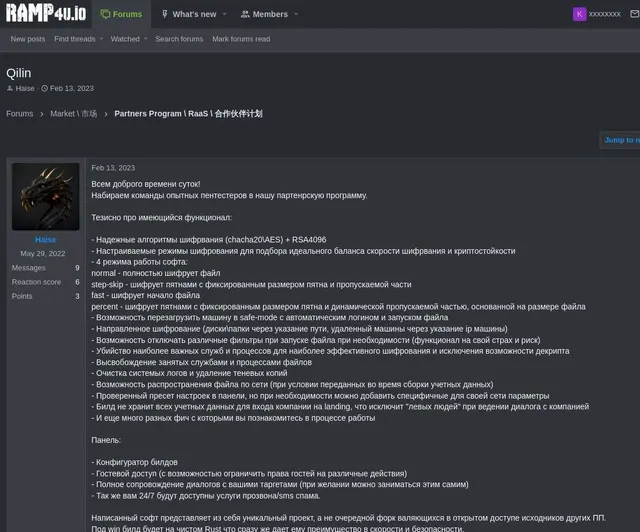
Qilin ransomware: understanding its double-extortion model and what organizations should review
Qilin is a ransomware-as-a-service operation active since September 2022, using affiliates to breach organizations and deploy ransomware. It steals data before encrypting systems and threatens disclosure; organizations should review their ability to detect intrusions, data theft, and…

Cloudflare introduces Zero Wire on Radar to track and address Internet vulnerabilities
Cloudflare introduces Zero Wire on Cloudflare Radar, a public source of information about serious Internet vulnerabilities. Its briefings summarize impact, related data, and response guidance; security teams should identify affected assets and follow vendor remediation guidance.