
At a glance
- Cloudflare warns that AI pentest frameworks such as ARTEX can automate and scale scanning and testing of Internet-exposed services.
- In investigated incidents, static CI/CD API tokens were used to pivot between environments.
- Review services, tokens, and unusual activity; reduce privileges and revoke or rotate tokens at risk of exposure.
- Cloudflare recommends six security pillars to limit scanning and unauthorized access.
Cloudflare warns AI pentest frameworks are scaling scans of Internet-exposed infrastructure
Cloudflare warns that ARTEX and similar AI pentest frameworks can scale scanning and testing of Internet-exposed services, and may enable lateral movement when combined with stolen credentials. Prioritize reviewing tokens, reducing privileges, and applying the recommended security controls.

In this article
Cloudflare warns that automated AI pentest frameworks such as ARTEX are scaling the scanning and exploitation of Internet-exposed infrastructure. In incidents investigated by Cloudforce One, stolen credentials were also used to pivot between hyperscaler environments and Cloudflare.
Overview and technical details
ARTEX and similar frameworks orchestrate AI agents and pentest tools to automatically map targets, find weaknesses, and carry out attack steps. Agents can operate in parallel, build graphs of assets and targets, and then observe, prioritize, and test externally exposed services.
In the investigated incidents, threat actors used static API tokens in CI/CD pipelines that did not expire, had broad access, and were not restricted by IP or rate limits. Cloudflare observed the tokens being used to pivot between hyperscaler environments and Cloudflare.
Affected systems
The warning focuses on Internet-exposed infrastructure and services, web applications, and credentials with broad access in CI/CD pipelines. Static API tokens that do not expire and are not restricted by IP or rate limits warrant particular attention. The supplied information does not identify affected software version branches.
Mechanism and impact
The frameworks can automatically observe and test public-facing services for weaknesses; when combined with stolen credentials, threat actors may use them to pivot between environments. Cloudflare also observed attempts to maintain persistence and authenticate third-party application session tokens.
Observed indicators include newly created Workers named with the patterns artex-*, artex-pgrecon-*, artex-pgw-*, or artex-do-* followed by alphanumeric suffixes; traffic exceeding 69 requests per minute across multiple parts of the infrastructure; and 400 database-dump requests in one hour. These are indicators observed in incidents and do not, by themselves, prove that a system showing them has been compromised.
Remediation and mitigation
Prioritize reviewing Internet-exposed applications and services, API tokens, and unusual activity.
Review CI/CD credentials; avoid static, non-expiring tokens and broad access. For tokens at risk of exposure, reduce privileges to the necessary level, restrict them by IP and rate, and revoke or rotate them.
Apply the six pillars of the Modern Security Model recommended by Cloudflare:
- Deploy a WAF with advanced rules such as rate limiting.
- Detect anomalies on customer-facing web applications and deploy Bot Defense.
- Require Identity-Gated Access for high-risk internal and external web applications.
- Enforce validated schemas alongside explicit security controls.
- Use Threat Intelligence to improve attack visibility.
References
Related articles

Synology DiskStation DS925+: information disclosure vulnerability in C2 Identity Plugin
Zero Day Initiative reports CVE-2025-14713 in the C2 Identity Plugin on Synology DiskStation DS925+. A nearby unauthenticated attacker could expose sensitive information, including stored credentials. Synology has released a corrective update; check the device and update according to official…

Cairn used in 25 automated attack campaigns targeting at least 19 organizations
Unit 42 says CL-STA-1238 used the Cairn AI framework with Zhipu GLM and DeepSeek in 25 campaigns targeting at least 19 organizations. Ten organizations experienced unauthorized access or data theft; relevant organizations should review accounts, credentials, and signs of lateral movement.

Unit 42 reports ARTEX and AI red teaming tools used in intrusion activity
Unit 42 observed attackers using ARTEX and AI-powered red teaming tools to automate scanning, testing and intrusion attempts against internet-facing assets. Prioritize exposed password-reset pages, APIs, identity flows and cloud services; centralize logs, detect automated behavior and block…
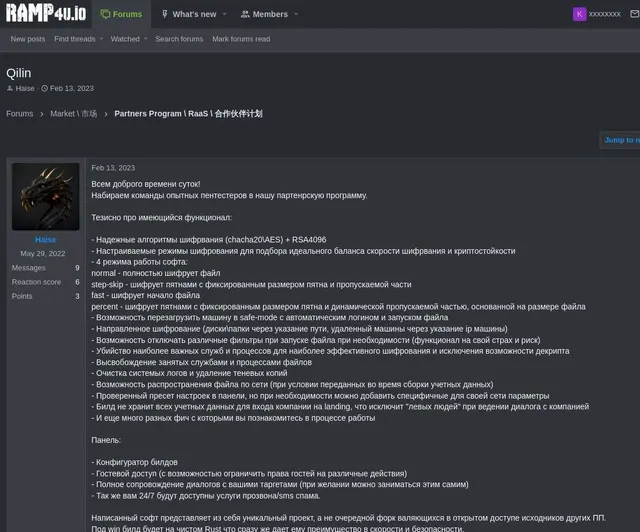
Qilin ransomware: understanding its double-extortion model and what organizations should review
Qilin is a ransomware-as-a-service operation active since September 2022, using affiliates to breach organizations and deploy ransomware. It steals data before encrypting systems and threatens disclosure; organizations should review their ability to detect intrusions, data theft, and…