
At a glance
- Unit 42 analyzed Falcon C2, a framework that controls implants running in browsers.
- Campaigns targeted government agencies; implants can steal data and distribute Antino.
- Prioritize reviewing browser compromise signs, unusual Chrome extensions, and related C2 activity.
Falcon C2 targets government webmail and web applications: review browser compromise signs
Unit 42 analyzed Falcon C2, a framework that controls browser implants and was used to compromise government webmail portals and web applications, steal data, and distribute Antino. Relevant organizations should prioritize reviewing browser compromise signs and unusual Chrome extensions.
In this article
Unit 42 analyzed Falcon C2, also known as XG or Xiàng Gē, which was used in campaigns targeting government webmail portals and web applications. The Palo Alto Unit 42 report describes how the framework controls browser implants, steals data, and distributes the Antino implant.
Overview and technical details
Falcon is a NodeJS command-and-control framework that controls JavaScript implants running in victims’ browsers. Unit 42 recorded campaigns from March through May 2026 and assessed with high confidence that Falcon has significant technical similarities to PeckBirdy and that they are variants of the same framework.
| Field | Details |
|---|---|
| Name | Falcon C2; also known as XG or Xiàng Gē |
| Type | NodeJS command-and-control framework |
| Related implant | Antino; uses Microsoft OneDrive as a C2 channel |
| Assessment of PeckBirdy | Unit 42 assessed with high confidence that Falcon and PeckBirdy are variants of the same framework |
Affected systems
The recorded campaigns targeted government agencies in one Middle Eastern country and four Southeast Asian countries. Targets included foreign affairs, defense, interior, and law enforcement agencies. The report identifies government webmail portals and web applications as targets; it does not specify affected product version branches.
Mechanism and impact
Attackers inject malicious JavaScript into government webmail portals and web applications. When a victim visits, the Falcon server generates an obfuscated implant tailored to that browser session. The implant can sideload a malicious Chrome extension and steal passwords, email, session cookies, and communications content.
The implant creates a persistent session identifier in local storage, cookies, and extension memory. Falcon maintains communications over TLS-encrypted WebSocket, sends a heartbeat every minute, and supports the Comet protocol, in which exchanged data is not encrypted. Falcon also distributes Antino, which uses Microsoft OneDrive as a C2 channel.
Remediation and mitigation
- Prioritize review: Government organizations and operators of webmail portals or web applications should review for browser compromise signs, unusual Chrome extensions, and related C2 activity.
- Protection products and services named: Palo Alto Networks lists Advanced WildFire; Advanced URL Filtering and Advanced DNS Security; Cortex XDR and XSIAM; Cortex Agentic Endpoint Security; Prisma Browser; Idira Endpoint Privilege Manager (EPM); and Idira Identity and Access Management (IAM).
- Threat intelligence: Unit 42 Threat Intel Services and Deep and Dark Web Service can provide threat intelligence, facilitate discussions with experts, and help monitor exposure.
- Suspected compromise: Contact Unit 42 Incident Response if compromise is suspected or an urgent incident occurs.
References
Related articles

Cloudflare warns AI pentest frameworks are scaling scans of Internet-exposed infrastructure
Cloudflare warns that ARTEX and similar AI pentest frameworks can scale scanning and testing of Internet-exposed services, and may enable lateral movement when combined with stolen credentials. Prioritize reviewing tokens, reducing privileges, and applying the recommended security controls.

Cairn used in 25 automated attack campaigns targeting at least 19 organizations
Unit 42 says CL-STA-1238 used the Cairn AI framework with Zhipu GLM and DeepSeek in 25 campaigns targeting at least 19 organizations. Ten organizations experienced unauthorized access or data theft; relevant organizations should review accounts, credentials, and signs of lateral movement.

Unit 42 reports ARTEX and AI red teaming tools used in intrusion activity
Unit 42 observed attackers using ARTEX and AI-powered red teaming tools to automate scanning, testing and intrusion attempts against internet-facing assets. Prioritize exposed password-reset pages, APIs, identity flows and cloud services; centralize logs, detect automated behavior and block…
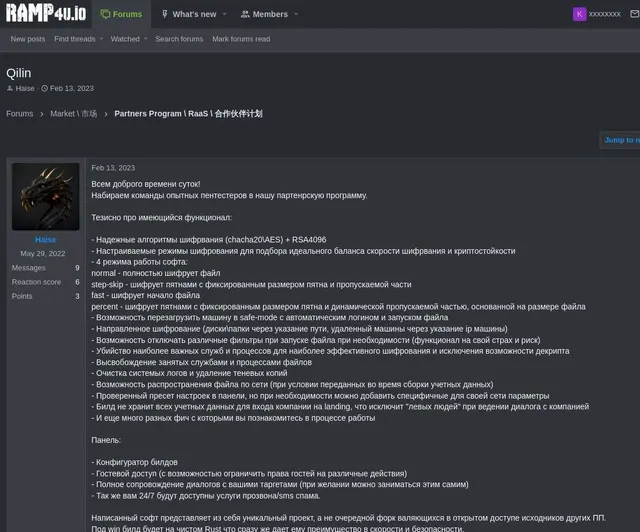
Qilin ransomware: understanding its double-extortion model and what organizations should review
Qilin is a ransomware-as-a-service operation active since September 2022, using affiliates to breach organizations and deploy ransomware. It steals data before encrypting systems and threatens disclosure; organizations should review their ability to detect intrusions, data theft, and…